The Mummy (1999)
Transcript
Thebes, City of the Living, crown jewel of Pharaoh Seti the First, home of Imhotep, Pharaoh’s high priest, keeper of the dead.
테베시, 인간의 도시, 파라오 세티 1세의 번성한 왕국이자 죽음을 관장하는 최고의 제사장인 이모텝이 있던 도시.
Birthplace of Anck-su-namun, Pharaoh’s mistress. No other man was allowed to touch her.
파라오의 여인인 아낙 수나문이 태어난 곳이다. 왕 외엔 누구도 그녀를 만질 수 없었다.
But for their love, they were willing to risk life itself.
하지만 그들은 사랑을 위해서 죽음도 두려워하지 않았다.
Pharaoh:
What are you doing here?
여기서 무엇을 하는 거냐?
Who has touched you?
누가 너에게 손을 댔느냐?
Imotep? My priest!
이모텝? 제사장이!
Imhotep:
Pharaoh’s bodyguards.
파라오의 근위대다.
Anck-su-namun: You must go! Save yourself.
빨라 가요. 살아야 해요.
Imhotep:
No!
안 돼!
Anck-su-namn:
Only you can resurrect me!
당신만이 나를 부활시킬 수 있어요.
Imhotep:
I will not leave you!
당신을 떠나지 않겠소.
Get away from me!
저리 비켜라.
You shall live again!
당신은 다시 살아날 것이오.
I will resurrect you!
나는 당신을 부활시킬 것이오.
Anck-su-namn:
My body is no longer his temple.
내 몸은 이젠 파라오의 것이 아니야!
To resurrect Anck-su-namun, Imhotep and his priests broke into her crypt and stole her body.
아낙 수나문을 부활시키기 위해 이모텝과 그의 제사장들은 성전에 잠입해 시체를 훔쳤다.
They raced deep into the desert, taking Anck-su-namun’s corpse to Hamunaptra, City of the Dead.
깊은 사막을 달려 아낙 수나문의 시체를 죽음의 도시 – 하무납트라로 가져갔다.
Ancient burial site for the sons of pharaohs, and resting place for the wealth of Egypt.
역대 파라오의 고대 묘지이자 이집트의 보물들이 잠들어 있는 곳으로.
For his love, Imhotep dared the gods’ anger by going deep into the city, where he took the black Book of the Dead from its holy resting place.
사랑을 위해 이모텝은 신성한 무덤도시에 깊숙히 들어가 어둠의 서를 꺼내 오므로써 신들의 노여움에 도전을 했다.
Anck-su-namun’s soul had been sent to the dark underworld.
아낙 수나문의 영혼은 어두운 지하세계로 보내졌고
Her vital organs removed and placed in five sacred canopic jars.
그녀의 중요 장기들은 제거된 후 호리병 5개에 나뉘어 보관됐다.
Anck-su-namun’s soul had come back from the dead.
아낙 수나문의 영혼이 죽음으로부터 돌아왔지만
But Pharaoh’s bodyguards had followed Imhotep and stopped him before the ritual could be completed.
하지만 파라오의 근위대는 이모텝을 미행해 왔고 의식이 완전히 끝나기 전에 이모텝을 저지했다.
Imhotep’s priests were condemned to be mummified alive.
이모텝의 제사장들은 산채로 미이라화 되도록 선고받았다.
As for Imhotep, he was condemned to endure the Hom-Dai – the worst of alI ancient curses.
이모텝에게는 홈다이의 고통을 견디도록 선고를 내렸는데, 이는 가장 잔인한 고대 형벌로서
One so horrible it had never before been bestowed.
그전까지는 그 누구에게도 선고된 적이 없는 형벌이었다
He was to remain sealed inside his sarcophagus, the undead for alI of eternity.
이모텝은 관속에 매장되어 영원도록 언데드로 남게 되었다.
The Magi would never allow him to be released, for he would arise a walking disease, a plague upon mankind, an unholy flesh eater, with the strength of ages, power over the sands, and the glory of invincibility.
마법사는 이모텝이 절대 풀려 나올 수 없도록 했는데 아니면 이모텝은 시대를 초월한 강함, 사막을 지배하는 힘, 이길 수 없는 영광을 가진 걸어다니는 질병이자 인간 최대의 재앙이며 저주 받은 식인 괴물으로 다시 부활하기 때문이었다.
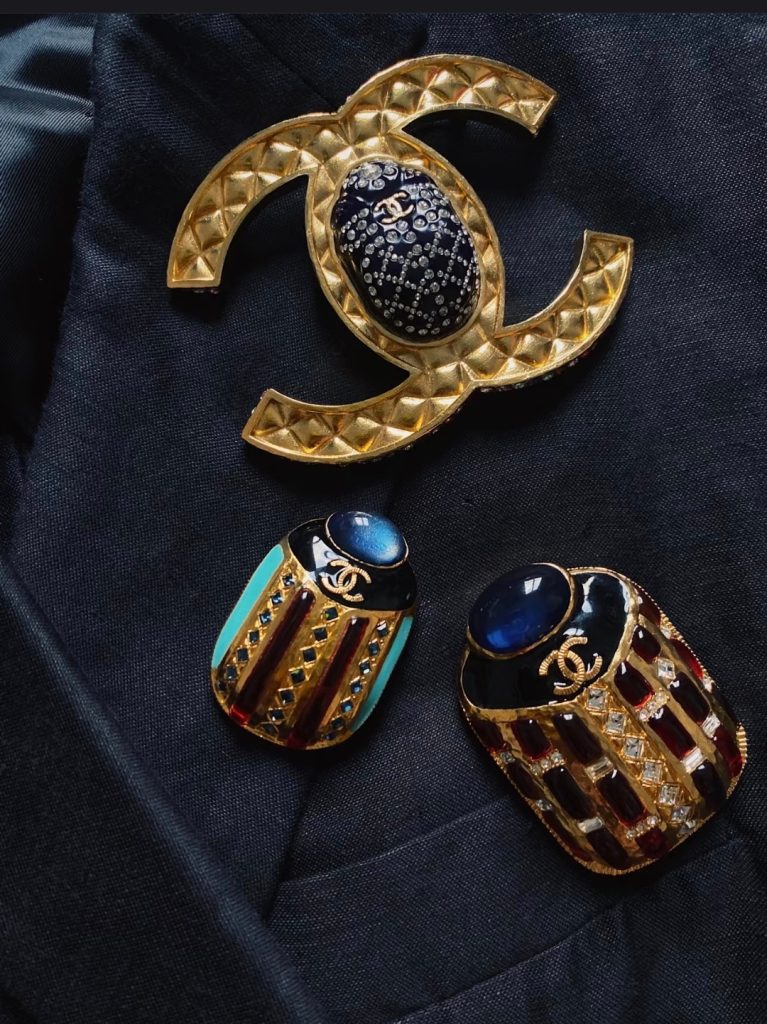
Scarab-shaped Brooches from CHANEL’s Egypt-inspired Collection
The scarab was a common type of amulet, seal, or ring bezel used in ancient Egypt. Also known as the dung beetle, the scarab rolls dung across the ground into round balls, which are used as a food source. The ancient Egyptians saw a similarity between the scarab rolling its ball of dung and the sun god rolling the sun across the sky. Because of this, the scarab became a symbol of Khepri, the sun god representing immortality and resurrection. Scarabs were often placed near the mummy’s heart inside the sarcophagus to ensure a smooth journey to the afterlife. Since they have survived in large numbers, their inscriptions and designs serve as valuable sources of information for archaeologists and historians studying the ancient world.
스카라브는 고대 이집트에서 부적, 봉인 또는 링의 베젤 등에 일반적으로 사용됐다. 스카라브는 쇠똥구리라고도 불리며, 배설물을 땅에 굴려 식재료로 사용한다. 고대 이집트인들은 배설물을 굴리는 스카라브와 태양을 굴리는 태양신 사이의 유사성을 보았고, 그 때문에 스카라브는 불멸과 부활을 나타내는 태양신인 케프리의 상징이 됐다. 스카라브는 종종 내세를 향한 편안한 항해를 위해 석관에 봉인된 미이라의 심장 옆에 높였다. 그것들은 많은 객체가 살아 남았으며, 새겨진 글과 유형들을 통해 고고학자와 역사가들이 고대 세계를 연구하는데 있어 귀중한 자료로 활용되고 있다.
