The Hemudu Prehistoric Culture
Look at this piece of pottery with a pig carved on it. Can you imagine that it has a history of about 7,000 years? This pottery comes from a very ancient and important civilization: the Hemudu prehistoric culture.
The Hemudu culture dates back about 7,000 years and was located around today’s Yuyao, Zhejiang Province, China. It belongs to the late Neolithic culture of the Yangtze River region. The Hemudu people lived in a humid area with many rivers and lakes, and they had already begun growing rice. This makes the area one of the earliest rice-growing regions in the world.
Their houses were mostly “stilt-style buildings,” which means wooden houses raised above the ground. These houses helped protect people from moisture, floods, and wild animals. They also kept pigs as domestic animals under their houses.
Although no complete writing system has been found at the Hemudu site, some simple symbols have been discovered. These symbols may have been an early form of writing. If you are familiar with Chinese characters, you may know the character “家,” meaning “home.” It is made up of a “roof” on top and a “pig” underneath. This shows that Chinese people had already started raising pigs at home from a very early time.
In addition, the Hemudu people made beautiful pottery. Although they did not have metal tools yet, they used animal bone and stone tools for farming and daily work. This shows a fairly high level of craftsmanship during the late Neolithic period.
The Hemudu culture reflects the lifestyle and wisdom of ancient Chinese people. It is also an important part of the diverse origins of Chinese civilization. If you are interested in ancient Chinese culture, you can visit the Hemudu Site Museum in Yuyao, or the Zhejiang Museum in Hangzhou, Zhejiang Province.
이 돼지가 새겨진 도기(陶器)를 한번 보세요. 7,000년의 역사를 가지고 있다는 게 믿어지시나요? 이 도기는 하무두(河姆渡) 문화에서 나온 유물로, 현재 항저우에 위치한 저장성 박물관에 소장되어 있습니다.
하무두 문화는 약 7,000년 전으로 거슬러 올라가며, 오늘날 중국 저장성 위야오(余姚) 지역을 중심으로 발달한 양자강 유역의 신석기 시대 문화입니다. 하무두 사람들은 강과 호수가 많은 따뜻하고 습한 환경에서 살았으며, 이미 벼농사를 시작했습니다. 그래서 이 지역은 세계에서 가장 이른 벼 재배 지역 중 하나로 알려져 있습니다.
하무두 사람들의 집은 대부분 ‘고상식(高床式) 가옥’이었습니다. 땅 위에 기둥을 세워 지은 목조 건물로, 습기와 홍수, 야생 동물로부터 사람들을 보호하기 위한 구조였습니다. 또한 집 아래에서는 돼지를 가축으로 키우기도 했습니다.
하무두 유적에서는 완전한 문자 체계는 발견되지 않았지만, 간단한 기호들이 많이 발견되었습니다. 이러한 기호들은 초기 문자 형태였을 가능성이 있습니다. 한자를 조금 아신다면 “家”라는 글자를 아실 텐데요. 이 글자는 위에는 지붕, 아래에는 돼지가 있는 형태입니다. 이는 아주 오래전부터 중국인들이 집에서 돼지를 키웠다는 사실을 보여줍니다.
또한 하무두 사람들은 도기를 만들었습니다. 당시에는 금속 도구가 없었지만, 동물의 뼈와 돌로 만든 도구를 사용해 농사와 일상생활을 했습니다. 이를 통해 신석기 후기의 상당히 높은 수준의 수공업 기술을 엿볼 수 있습니다.
하무두 문화는 고대 중국인의 생활 방식과 지혜를 잘 보여주는 문화이며, 중국 문명의 다양한 기원을 이루는 중요한 부분이라고 할 수 있죠. 중국의 고대 문화에 관심이 있다면, 저장성 위야오에 있는 하무두 유적 박물관, 혹은 항저우에 있는 저장성 박물관을 방문해 보시는 것도 좋습니다!
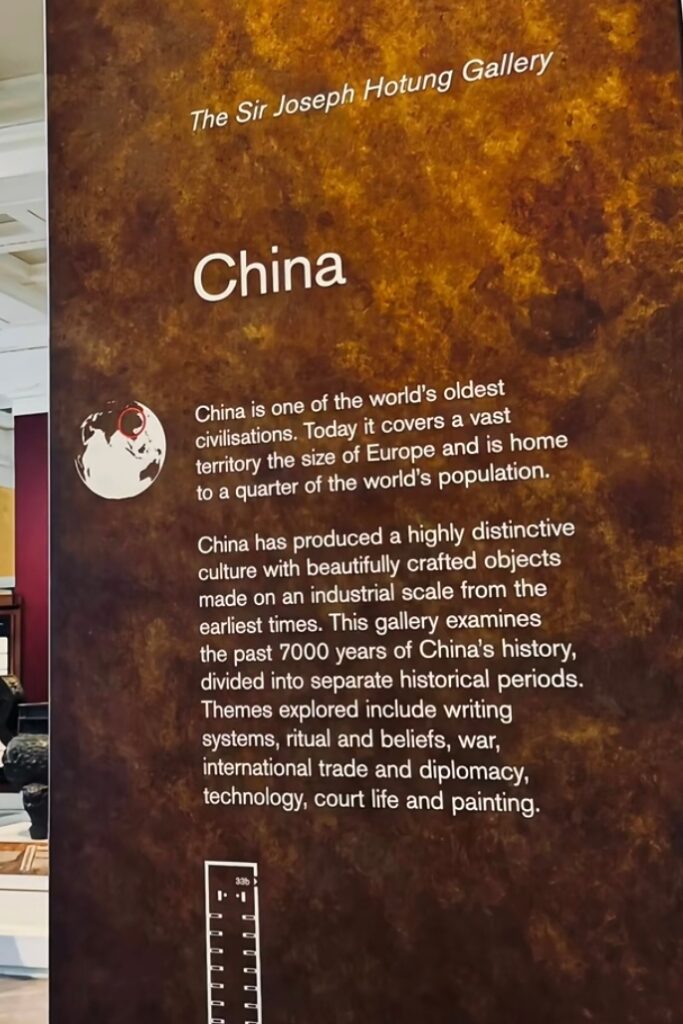
This is the introduction at the entrance of the China Gallery in the British Museum, and it mentions China’s 7,000 years of civilization. But in 2019, Chinese archaeologists discovered the Mengxi River Prehistoric Culture in Sichuan, which dates back about 80,000 years. As more archaeological discoveries are made, history textbooks will probably continue to be updated.
이것은 대영박물관 중국관 입구에 있는 소개문입니다. 여기에서도 중국의 7,000년 문명에 대해 언급하고 있네요. 그런데 2019년, 중국 고고학자들은 쓰촨성에서 약 8만 년 전으로 거슬러 올라가는 멍시허 선사문화 유적을 발견했습니다. 앞으로도 고고학적 발견이 계속된다면, 우리가 알고 있는 역사와 교과서의 내용도 계속 새롭게 업데이트될 것 같아요. ㅋㅋㅋ
