Ruiying Qilin Tu
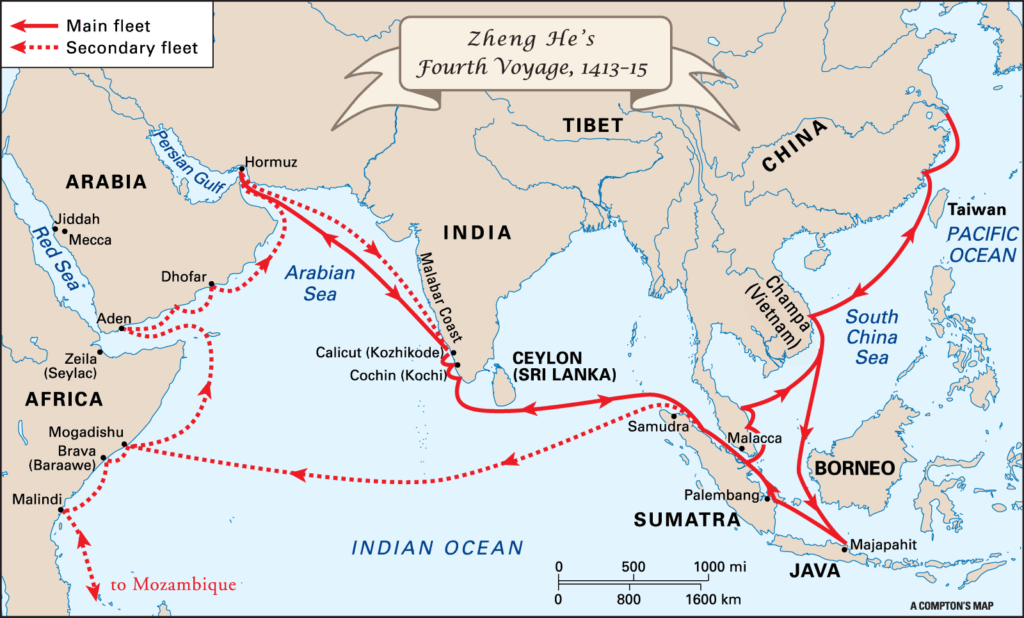
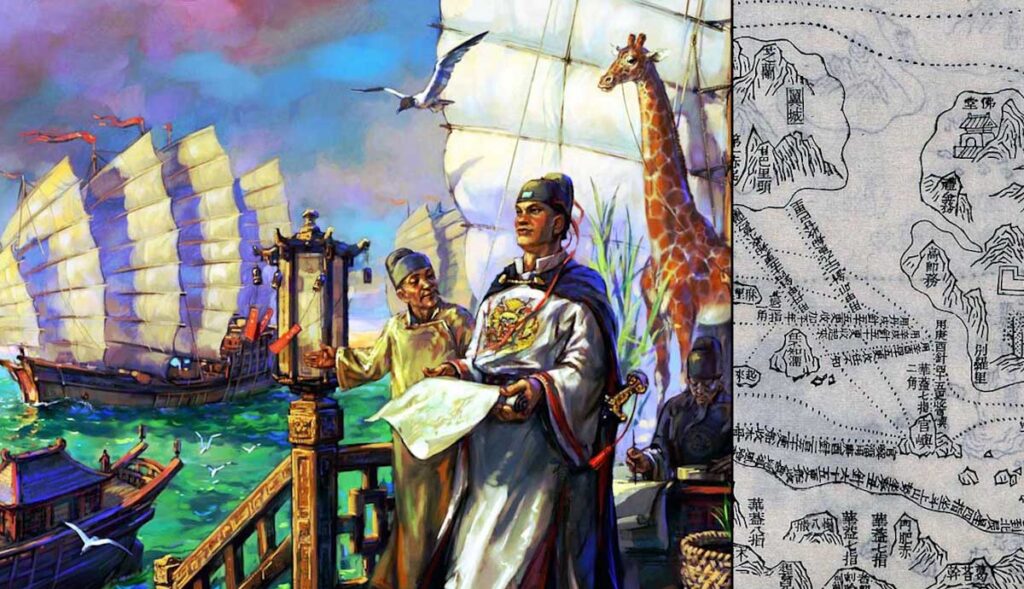
As we all know, giraffes are native to Africa. So when did they first come to China? The answer can be found in an old Chinese painting: Ruiying Qilin Tu. In the early Ming dynasty, the Yongle Emperor, Zhu Di sponsored Zheng He’s maritime expeditions—seven great voyages between 1405 and 1433. Sailing across the Indian Ocean, Zheng He’s fleet sailed to the east coast of Africa, making stops at ports such as Mogadishu in Somalia and Malindi in Kenya. Along the way, through trade and diplomacy, the fleet returned with a wide range of goods and exotic animals—some entirely unknown in China at the time—including giraffes.
The painting Ruiying Qilin Tu was commissioned by the Yongle Emperor, Zhu Di, and painted by the court artist Shen Du in 1414. Today, the painting is housed at the National Palace Museum in Taipei. Interestingly, an inscription on the work records that the giraffe portrayed here was not purchased by Zheng He. Instead, it was bought in Yemen by the ruler of Bengal, who then asked Zheng He’s fleet to transport it to Beijing as a tribute gift for the Yongle Emperor. Of course, Zheng He also acquired some giraffes from Africa, since they appear in several other paintings as well.
The word Qilin actually shows up as early as the Zuo Zhuan, a text from the early Warring States period. In Chinese tradition, a Qilin is a mythical creature of good omen—basically a symbol of peace, prosperity, and virtue. So when a giraffe finally arrived in China and people saw this strange, long-necked animal for the first time, they didn’t have a proper name for it. They reached for a familiar one and called it a Qilin. And honestly, that meaning—“peaceful times” and “a virtuous ruler”—was exactly the kind of message the Yongle Emperor would have wanted to hear. No wonder he had a painting made to mark the occasion. What’s also interesting is that in Japanese the giraffe is called Kirin, and in Korean it’s Girin —both clearly borrowed from Chinese.
모두가 알다시피 기린의 원산지는 아프리카다. 그렇다면 기린은 언제 처음 중국에 들어왔을까? 답은 바로 이 그림 속에 있다. 명나라 초기, 영락제 주체(朱棣)는 정화(鄭和)의 해상 원정을 적극 후원했는데, 이것이 바로 1405년부터 1433년까지 일곱 차례 이어진 정화의 대항해다. 정화의 함대는 인도양을 건너 아프리카 동해안까지 항해하며, 오늘날 소말리아의 모가디슈와 케냐의 말린디 등에 정박했다. 항해 과정에서 교역과 외교가 활발히 이루어지면서, 당시 명나라에는 보기 드물거나 아예 처음 접하는 물품과 이국적인 동물들이 들어왔는데, 그중 하나가 바로 기린이었다.
《서응기린도(瑞應麒麟圖)》는 영락제의 명으로 궁정 화가 심도(沈度)가 1414년에 그린 작품이다. 현재 이 작품은 타이베이 국립고궁박물원에 소장되어 있다. 흥미롭게도 그림의 기록에 따르면, 이 ‘기린’은 벵골(오늘날의 방글라데시) 통치자가 예멘에서 구입한 뒤 정화의 함대에 부탁해, 영락제에게 바치는 조공으로 베이징까지 운송된 것이다. 물론 정화도 아프리카에서 기린을 몇 마리 구입했음을 알 수 있는데, 다른 그림들에도 ‘기린’이 등장하기 때문이다.
한편 기린(麒麟)이라는 이름은 전국시대 초기의 작품인 《좌전(左傳)》에도 이미 등장한다. 기린은 본래 상상 속에서 길상을 의미하는 동물로, 덕 있는 군주가 다스리는 태평성대를 상징하는 존재다. 따라서 중국에 처음으로 이 낯선 동물이 들어왔을 때, 사람들은 자연스럽게 그 이름을 빌려 ‘기린’이라고 부르게 된 것이다. ‘태평한 시대’와 ‘덕 있는 군주’라는 상징은 영락제가 특히 좋아했을 메시지였을 테니, 그가 이를 기뻐하며 그림까지 남긴 것도 충분히 이해된다. 흥미로운 점은 이 이름이 동아시아 전반으로 퍼졌다는 것이다. 일본에서는 ‘きりん’, 한국에서는 ‘기린’이라고 부르는데, 이름만 봐도 중국에서 전해졌다는 흔적이 그대로 남아 있는 셈이다.